In all my books I try to give chorus to voices that have not been heard or not heard loudly enough, to tell histories that have been hidden or forgotten, to work at the junction point of history and journalism. Churchill’s Few about the Battle of Britain includes a profile of a Polish pilot, the men who did so much in the Battle of Britain but were so under-recognised afterwards. The book also features a Luftwaffe pilot, Ulrich Steinhilper, to complement and contrast with the experiences of those who flew for the RAF.
In Secret Letters: A Battle of Britain Love Story I had access to the frankest, most powerful letters written during the Battle of Britain, centring on a squadron where many young men were dying because of poor leadership. RAF Intelligence Officer Geoffrey Myers wrote these secret letters to his wife and two tiny children in German-occupied France, but they were too dangerous to send and were to be read only after the war, if they both survived.
Apart from the building of the Thai-Burma (River Kwai) Railway the story of the Allied prisoners of war in Japan has been neglected, and, more than that, the experiences of the hundreds of Allied prisoners of war in Nagasaki when the second Atomic Bomb devasted that city have been forgotten. Writing Nagasaki:The Forgotten Prisoners was an honour, a chance to tell so many unheard stories, the only Western eyewitnesses on the ground to the destructive power of atomic weapons.
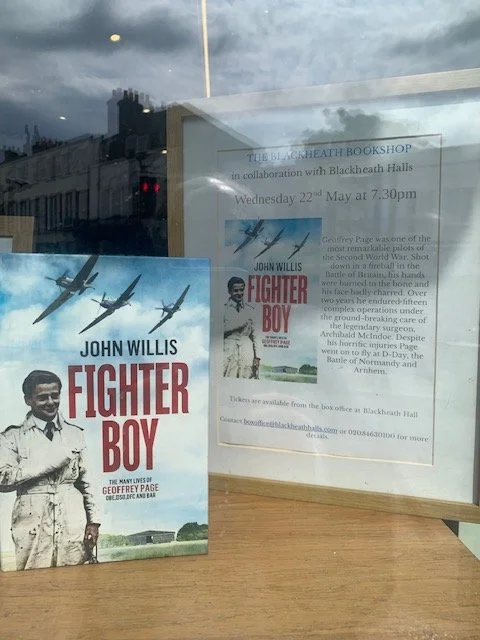
I have been lucky to have met so many remarkable men and women, not least Geoffrey Page the central character in Fighter Boy, a man who endured two years of operations under the innovative care of the legendary Archibald McIndoe and was determined to fly again, a man honest enough to admit that he enjoyed the act of killing while being one of the great fighter pilot heroes of the Second World War.
The People's War ( BBC Books 2025) is the culmination of five intensive years of research and writing and tells the story of the whole of the Second World War through the words of ordinary men and women. It is a street-level view of the war, authentic, raw, vivid, and surprisingly funny.
I salute them all. Lest We Forget.
BIOGRAPHY
I started my career as a documentary filmmaker at Yorkshire Television in Leeds. Learning from early mistakes and encouraged by the risk-taking climate, one of my first documentaries Johnny Go Home, won the BAFTA Award for Best Documentary. I followed this with a string of other award-winning social documentaries including Goodbye Longfellow Road, Rampton-The Secret Hospital, and Alice-A Fight for Life.
When I moved to Channel 4 as Controller of Factual Programmes in 1988, I enjoyed similar freedom. The channel’s remit was to take creative risks, hold those in power to account, and give voice to the voiceless. Five years later I was promoted to Director of Programmes. On my watch we made great films like Trainspotting and Four Weddings and a Funeral, comedies like Father Ted and Drop the Dead Donkey, and new factual series including Cutting Edge and Secret History.
Secret History sat in a place I wanted to be, at the intersection between history and documentary. At school I was lucky to have an inspiring history teacher but, although I had studied history at Cambridge University, modern history in those days at Cambridge ended in the 19th century. I wanted to explore the 20th Century events that had shaped the world I was living in now.
When I stopped work full time in television, after happy spells at United Productions, WGBH in Boston, and Mentorn Media, makers of Question Time for the BBC, there was finally the time and opportunity to go back to my first love, modern history. In particular, I was, and still am, fascinated by World War Two.
The blame for this sits with my father, the writer Ted Willis. In the 1930’s he was a left-wing youth leader and an active anti-fascist who had opposed in words and actions, Franco, Mosley, and Hitler. My father was among over 2,300 names on Hitler’s Black (or Special Search) List, the Gestapo’s notorious Sonderfahndungliste. If the Nazi invasion in 1940 had succeeded, no doubt my father would have been rounded up and executed.
Quite simply, I owe my life, my existence, to the men and women who fought the Nazis, many of whom sacrificed their own lives, so that a post-war generation could be born into freedom. Writing books about the war, trying to keep stories alive for today so that we might learn from yesterday, is my own small way of trying to pay the brave men and women of the Second World War back.
BAFTA INTERVIEW
John Willis reflects on his career in the television industry as a director and a channel controller, winning a BAFTA and his role as Chair of the Academy from 2012 – 2014. BAFTA Greats is a series of interviews recording the life and careers of a range of individuals that have helped to shape BAFTA, its activities and its role within the film, television and games industries in the UK and abroad. The opinions expressed in these interviews are the interviewees own and do not reflect the views of BAFTA. Filmed at the Corinthia Hotel in London, July 2015
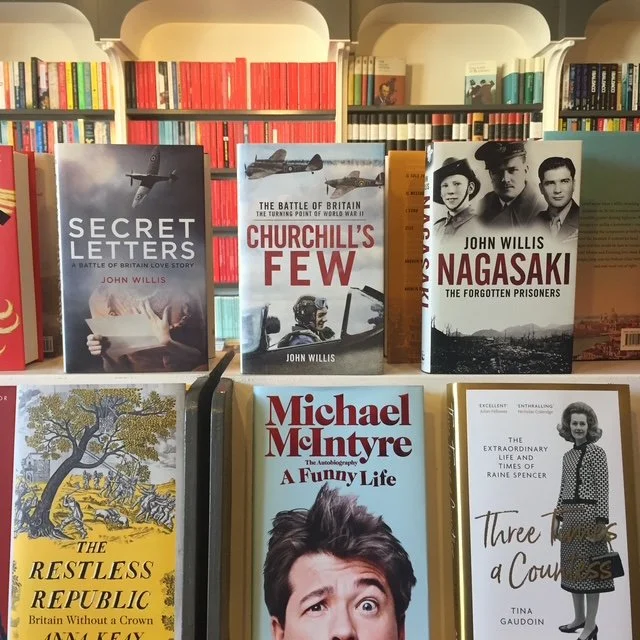
Bookshop, Norfolk
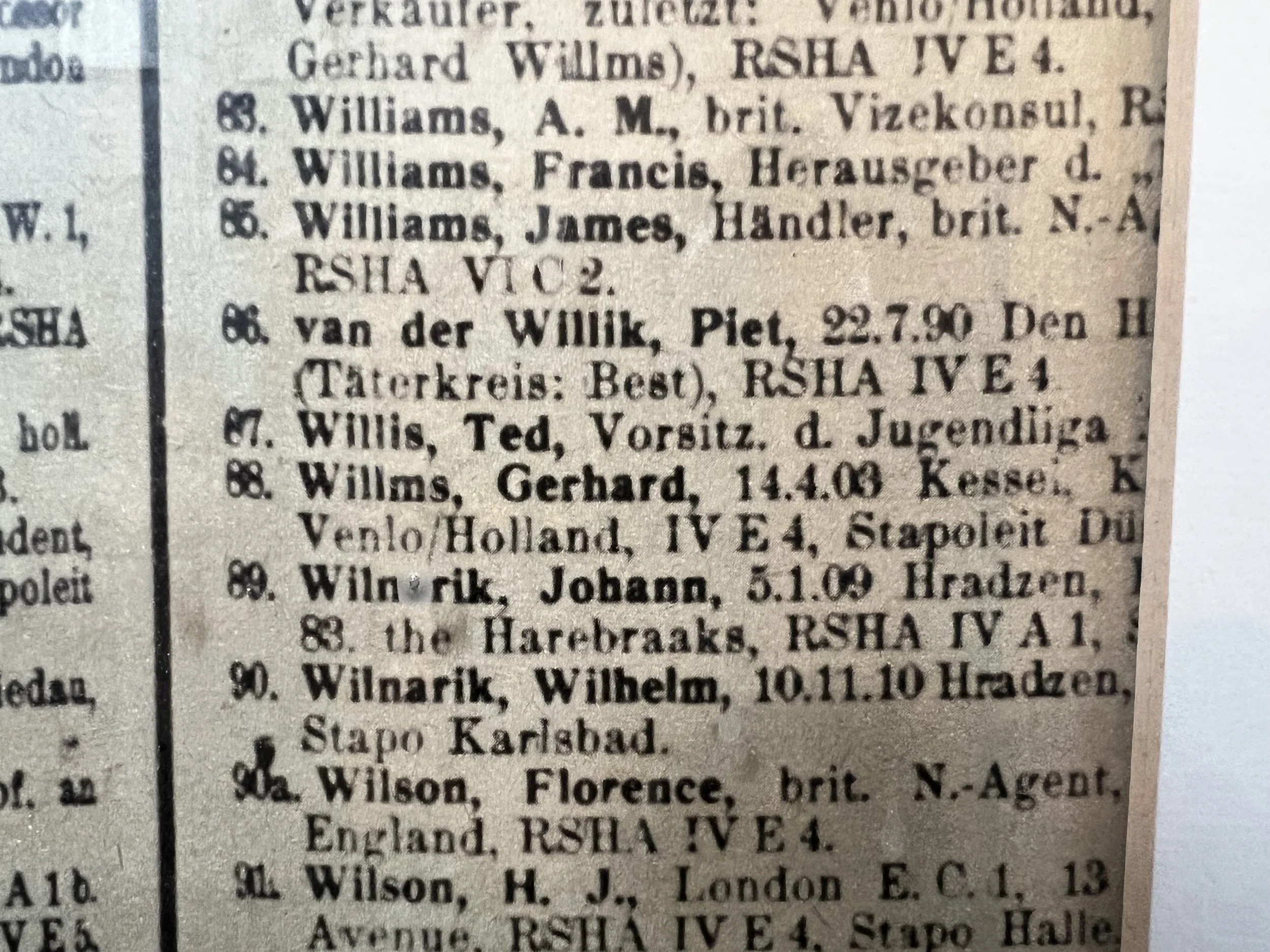
Hitler's Black Book, including my father
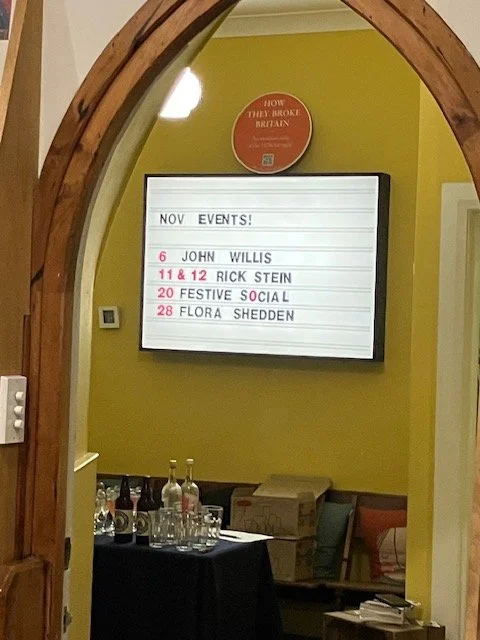
Forum Books, Corbridge
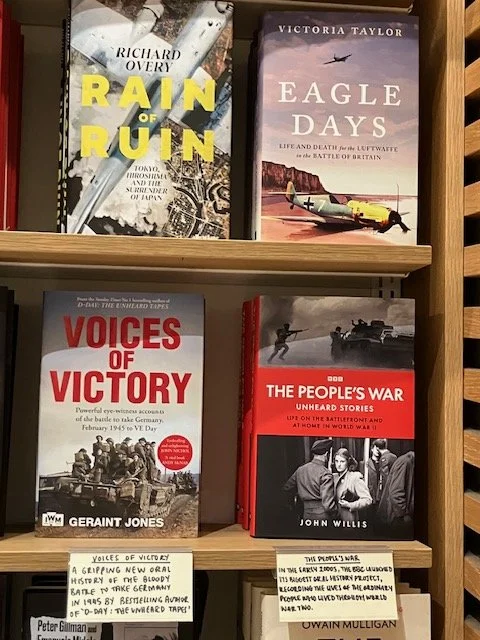
Waterstone’s Piccadilly
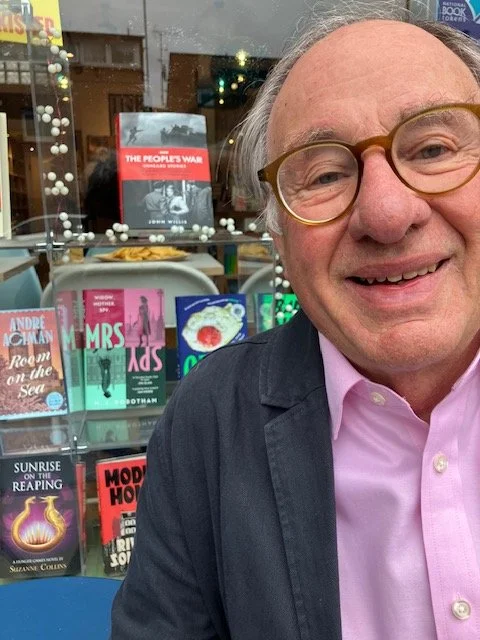
Ink@84 Bookshop, London
Blackheath Books, London